Stock Scanner - Market Mover
- 3.1
- Rating
- 50.00K
- Installs
- Free
- Price

 Analysis by App-foxy
I approached Stock Scanner - Market Mover as a practical finance tool rather than a complete investing platform, and that distinction shaped my opinion from the start. Its main job is to help me watch market activity, follow stock-related news, notice unusually strong money movement, and narrow a large list of shares with scanners. It does not try to replace a brokerage account or turn research into a one-tap trade. Instead, it works best as a discovery layer: a place I can open when I want ideas to investigate before making decisions elsewhere.
That focus is both its clearest strength and its biggest limitation. When I already know what kind of market activity I want to find, a dedicated scanner can be more useful than scrolling through a general finance app. When I need a polished portfolio, detailed company research, trading execution, or a complete investing dashboard, I would look toward a more established alternative. My overall view is that this free finance app is worth trying for curious market watchers, but it demands a more hands-on approach than its short store description might suggest.
How Stock Scanner - Market Mover fits into everyday research
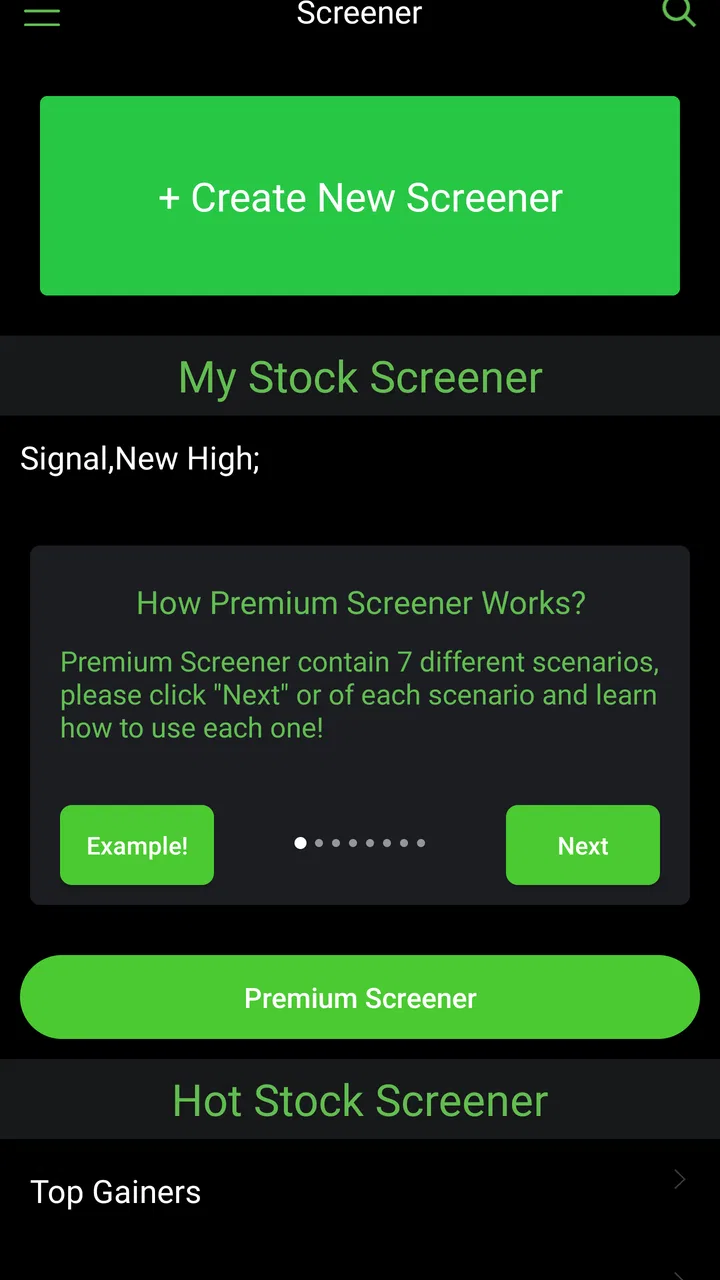
The app comes from Stock Screener APP and is aimed at people who want to monitor shares without beginning every session from a blank screen. I found the concept most useful when I treated it as a filter between the broad market and my own watchlist. Rather than asking it to tell me what to buy, I used the scanning idea to decide which companies deserved a closer look.
You May Also Like

 Blood Strike: 2.5 Anniversary
Blood Strike’s Loadouts Turn Every Drop Into a Tactical Gamble
A close look at Blood Strike’s custom loadouts: how fast access to signature weapons reshapes its battle royale rhythm, rewards preparation, and narrows the gap between fights.

 Pandora - Music & Podcasts
Pandora’s Music Is Easy to Start, but Harder to Recover
Pandora’s strength is its low-effort path from a seed to a station. Its weak spot is how much confidence it asks you to place in connection, setup, and quiet recovery.

 8 Ball Pool
 Is Built on Rivalries, Rematches, and Routine
A close look at the rivalries, rematches, shared routines, and unanswered safety questions that turn a quick pool match into a persistent mobile community.

 Samsung Music
’s Quiet Strength Is Playing What You Already Own
Its reach comes less from spectacle than from dependable access to a personal library. That simplicity is both the app’s strongest retention engine and its ceiling.

 AccuWeather: Weather Radar
AccuWeather Review: A Quick, Clear Forecast for Everyday Decisions
For everyday plans, the best forecast is the one you can understand quickly. AccuWeather makes rain timing, radar, and local conditions easy to act on, with a few trade-offs.

 Hill Climb Racing
Why Hill Climb Racing Still Turns Crashes Into One More Run
A tiny car, a bumpy hill and one more upgrade: Hill Climb Racing keeps resurfacing because its simple chaos makes every near-miss feel personal.
More From Our News Desk
View All News


That is an important difference for new investors. A scanner can surface movement, but movement alone is not a reason to buy. A share rising quickly may be reacting to news, sector momentum, speculation, or a temporary burst of attention. The app can help me notice that event, while the responsibility for checking the underlying business, valuation, risk, and broader market context remains with me.
The interface is most valuable when I have a question in mind. For example, I might want to see which stocks are attracting unusual attention, which names are moving in a particular direction, or whether a news story is affecting companies I already follow. That question-led workflow is more productive than opening the app repeatedly and hoping a useful idea appears.
I also appreciated that the app is free to install. That lowers the barrier for someone who wants to test a stock scanner before committing to a paid research service. At the same time, in-app purchases range from $9.99 to $349.99 per item, so I would examine any upgrade screen carefully before assuming the entire experience is free. The basic entry point is accessible, but the possible cost of optional items makes it sensible to understand what is included before spending money.
What the scanners are genuinely good at
The strongest part of the experience is the shift from passive browsing to targeted discovery. A normal finance app often gives me a market overview, a collection of headlines, and a list of familiar companies. That can be convenient, but it can also leave me looking at the same large names every day. A scanner gives the session a more specific purpose and can make the research process feel less random.
One useful habit is to scan first and investigate second. I would note a small group of interesting results, then open the related news and compare the price movement with the explanation being reported. If the movement has a clear catalyst, I can decide whether it belongs on a watchlist. If the headlines are vague or the move appears disconnected from meaningful information, I treat it as a prompt for caution rather than an opportunity.
Another practical use is preparing for a short research session during a busy day. Suppose I have ten minutes before work and want to check whether anything deserves attention. A broad market app may encourage endless scrolling, while a scanner can give me a narrower starting point. I can review the most relevant names, save the ones that fit my existing interests, and leave deeper analysis for later.
The news-tracking side also adds value when it is used as confirmation rather than as a standalone source. I would not make an investment decision from a headline alone, but seeing news alongside market movement helps me form a better question: is the price reacting to earnings, a sector development, a company announcement, or simply general market pressure? That connection is more useful than either a price list or a news feed viewed in isolation.
A workflow that avoids chasing noise
My preferred routine with this app would be deliberately repetitive. First, I would choose one scanning purpose instead of checking every available signal. Next, I would separate familiar companies from names I do not understand. Then I would compare the apparent market move with current news and my own investment time frame. Finally, I would record only a few candidates for further research.
This approach matters because stock scanners naturally reward attention-grabbing movement. If I open the app without rules, the most dramatic result can dominate my thinking even when it is unsuitable for my goals. I found the tool more useful when I treated every result as a lead, not a recommendation.
A less obvious advantage of this workflow is that it can expose gaps in my watchlist. If the same industries or types of companies appear repeatedly, I can ask whether I am overfocused on one part of the market. The scanner does not solve diversification for me, but it can reveal how narrow my attention has become. That makes it useful not only for finding active stocks, but also for checking my own habits.
I would also avoid scanning immediately after seeing a dramatic social-media claim. In that situation, the app is better used to verify whether the broader market is showing related activity than to confirm an impulse. If there is no supporting news or if the movement looks isolated, I would wait. This is one of the clearest trade-offs: the app can speed up awareness, but speed can easily become overreaction.
News is helpful, but it still needs judgment
Having stock news close to scanner results makes the app more convenient than a tool that only displays price movement. I can move from an unusual market event to the context behind it without rebuilding the search from scratch. For a beginner, that connection may make the research process feel easier to follow.
Still, I would not confuse convenience with completeness. News is often brief, fast-moving, and written to explain what has already happened. It may not answer the questions that matter most to a long-term investor, such as whether a company can sustain growth, how much debt it carries, or whether the current valuation leaves room for disappointment. I would use the app to identify what deserves reading, then continue with company filings, investor materials, and a trusted research source.
The same caution applies to big-money movement. Seeing evidence of strong interest can be informative, but it does not tell me why a participant acted, whether the move is temporary, or whether the same trade fits my risk tolerance. Large-market activity can attract attention precisely because it is difficult for an ordinary investor to interpret. I like the signal as a starting point, but I would never treat it as proof that following the crowd is sensible.
For day-to-day use, I would keep a written distinction between facts and interpretations. A fact might be that a stock appeared in a scanner or was connected with a news item. An interpretation might be that the company is becoming more attractive. Keeping those separate prevents the app’s fast presentation from making a conclusion feel more certain than it really is.
Where the experience falls short
The main weakness is that a discovery tool can leave me wanting more depth. I can find market activity and news, but finding a candidate is only the beginning of responsible research. If I want a single place for portfolio tracking, trade execution, detailed financial statements, alerts tailored to a long-term plan, and extensive company comparisons, I would probably prefer a full brokerage or research platform.
This limitation is especially important for newcomers who may assume that a scanner is a guided investing service. It is not the same as receiving a carefully explained shortlist. The app can direct my attention, but it does not remove the need to understand what I am seeing. Someone who wants clear educational explanations at every step may find the experience less reassuring than a beginner-focused investing app.
I also see a possible friction point in the app’s modest public reception. It has an average rating of 3.1 from around two hundred ratings, with several dozen written reviews, and it has passed the threshold of over fifty thousand installs. Those figures suggest that people are using it, but they also tell me to keep expectations realistic. I would test the workflow personally rather than assuming it will feel as polished as a widely established finance service.
The version I reviewed is 8.1, and the app runs on Android 8.0 or later. That makes it available to many Android users, including people with older devices, although compatibility alone does not guarantee that the interface will feel equally comfortable on every screen. I would pay attention to readability and navigation on my own phone before relying on it during a fast-moving market session.
Another limitation is the tension between a free starting point and optional purchases. A free download is useful for experimentation, but users should not rush through payment prompts simply because a scanner result looks urgent. I would spend time with the no-cost experience first, identify the exact function I am missing, and only then decide whether an in-app item is justified. For casual market curiosity, paying a large amount would be difficult for me to defend.
Who will get the most from it
I think this app suits an investor who already has a basic research process and wants a faster way to discover market activity. It can be helpful for someone maintaining a watchlist, comparing several sectors, or looking for news-linked movement before doing deeper homework. It is also a reasonable low-commitment option for a learner who wants to understand how scanners change the way people search through a large market.
It may be particularly useful for a person who feels overwhelmed by the number of listed companies. Instead of trying to browse everything, that user can begin with a defined question and use the results to create a manageable research queue. The app does not make the decision, but it can make the first step less intimidating.
I would recommend it less strongly to a passive investor who checks a portfolio occasionally and has no interest in short-term market movement. That person may gain more from a simple brokerage watchlist and reliable long-term account information. Likewise, anyone seeking direct trading, comprehensive financial analysis, or a complete personal-finance system should compare this app with tools built specifically for those jobs.
It is also not my first choice for someone who tends to act emotionally. A stream of active stocks, news, and large-money signals can encourage frequent checking. If seeing a sudden mover makes you feel compelled to buy immediately, a slower research routine may be healthier. The app works best for a user who can pause, verify, and accept that a missed opportunity is usually better than an unexamined decision.
My final view after using it
Stock Scanner - Market Mover has a clear and useful role: it helps me turn a huge market into a smaller set of things worth investigating. Its combination of scanners, market observation, news tracking, and attention to significant money movement makes it more purposeful than a basic quote list. I especially like it as a first-pass research tool, where the goal is to find questions rather than receive answers.
My recommendation comes with a firm condition. I would use it alongside a brokerage account and deeper sources, not as a replacement for them. The app can show me where activity is happening, but I still need to determine whether that activity matters, whether the company fits my plan, and whether the risk is acceptable. That boundary should be clear before installation.
For a free finance app from Stock Screener APP, it offers a practical way to explore stock movement without immediately committing to a paid service. The average rating of 3.1 means I would approach it as a tool to test rather than a flawless solution. I would begin with one repeatable scanning routine, avoid impulse purchases, and judge its value by whether it improves my research discipline.
In the end, I see it as a useful market radar, not an investing co-pilot. If you enjoy doing your own homework and want a focused way to discover active stocks and related news, it is worth trying. If you want polished portfolio management, trading, or detailed fundamental analysis in one place, I would choose a broader alternative instead. Its best quality is focus, and its biggest weakness is that focus stops before the full investment decision is made.
FAQs for Stock Scanner - Market Mover
01What is Stock Scanner - Market Mover used for?
Stock Scanner - Market Mover is designed to help investors monitor stocks that are experiencing notable price or trading activity. After reviewing the app, its main purpose is to present market movers, price changes, volume information, and other useful indicators in a more accessible format. It can be helpful for discovering potential opportunities, but it should be treated as a research tool rather than a source of guaranteed investment recommendations.
02Does Stock Scanner - Market Mover provide real-time stock data?
The availability and speed of market information can depend on the data provider, exchange, subscription level, and the specific stock being viewed. Some quotes may be delayed, while other features may offer faster updates. Before relying on the app for active trading, users should check the timestamp shown for each quote and review the app’s terms carefully. Market data delays can significantly affect short-term decisions.
03Can beginners use Stock Scanner - Market Mover effectively?
Yes, beginners can use the app to learn how stocks are moving and to create a watchlist of companies worth researching. However, the scanner may display technical terms such as percentage change, volume, volatility, and market capitalization that new investors may need to study first. The app does not replace financial education, and users should understand each indicator before making decisions based on the results.
04Is Stock Scanner - Market Mover suitable for day trading?
The app may be useful for day traders who want to identify stocks with unusual movement, increased volume, or strong momentum. Nevertheless, suitability depends on the speed and accuracy of the available data, as well as the user’s trading platform and execution process. A scanner only highlights possible candidates; it does not confirm an entry or exit. Always verify prices and conditions with your broker before trading.
05Is Stock Scanner - Market Mover free to download, and are there in-app purchases?
The app may be available to download at no initial cost, but certain tools, advanced filters, premium market data, or ad-free features can require payment depending on the current version and platform. Users should review the Google Play Store or Apple App Store listing before installing it, paying attention to subscriptions, renewal terms, and trial periods. Pricing and included features may change over time.
Pros
- Quickly highlights stocks with unusual price and volume activity.
- Useful filters help narrow results by market movement and trading signals.
- Clean interface makes scanning watchlists straightforward for beginners.
- Can support faster research before making investment decisions.
- Helpful for discovering potential opportunities beyond familiar stocks.
Cons
- Market data may be delayed depending on the selected exchange or plan.
- Advanced scanners and detailed signals may require a paid subscription.
- Alerts can become overwhelming during volatile trading sessions.
- It does not replace fundamental research or professional financial advice.
- Coverage and features may vary between Android and iOS versions.

Stock Scanner - Market Mover
Gallery